
Fridge Horror Game
Honor appsStrategy
4.41.57K Reviews
- Version
- 1.1.2
- Installs
- 5.00M
- Age Rating
- Mature 17+
Screenshots
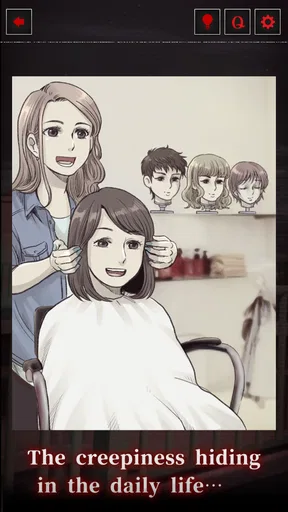
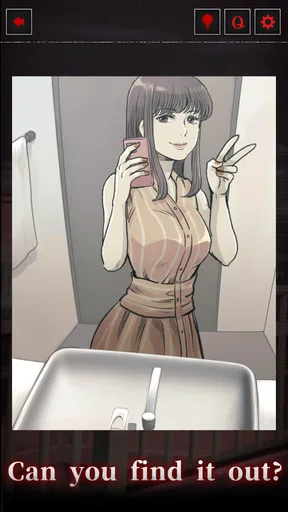
Our Review of Fridge Horror Game
 Analysis by Appyee
Fridge Horror is a strategy game from Honor apps that takes an ordinary household object and turns it into the center of a disturbing puzzle experience. I went in expecting a quick horror curiosity, but the game works best when I treated each situation as a small investigation rather than simply tapping through a sequence of surprises. Its basic idea is easy to understand, yet the mood depends on noticing details that would be easy to ignore in a more conventional mobile game.
The game is free to download and is aimed at mature players aged 17 and over. That age guidance matters here: the appeal is not a cheerful kitchen theme, but the tension created by finding unsettling implications in familiar scenes. I would not recommend it as a casual game for children or for anyone who dislikes horror built around uncomfortable images and ideas. For the right player, though, it offers a compact change of pace from the usual fantasy battles, card systems, and city-building strategy games.
How the refrigerator becomes a strategy puzzle
The most interesting part of Fridge Horror is the way it makes observation feel like a tactical skill. Instead of giving me a large map, a long technology tree, or a squad to manage, it asks me to read the scene in front of me. The refrigerator is not just decoration; it is the visual framework that makes ordinary clues feel suspicious. A label, arrangement, color, or apparently harmless item can change how I interpret the whole picture.
That design gives the game a different rhythm from mainstream strategy titles. In a typical strategy game, I plan several turns ahead, compare resources, and accept that progress comes from improving a unit or unlocking a stronger option. Here, progress comes from improving my attention. I have to slow down, check the obvious interpretation, and then question it. The winning move is often a better observation rather than a faster tap.
I found it useful to inspect each scene in layers. First, I looked at the broad composition and tried to understand what the game wanted me to notice. Then I checked the smaller details around the main object. Finally, I reconsidered anything that seemed too neatly placed or strangely emphasized. This approach is more reliable than tapping randomly, and it also makes the horror feel more earned because the discovery comes from my own reading of the scene.
The game’s short description, “Fridge Horror,” is a concise explanation of its central hook, but it does not fully express the strategic side. The challenge is not simply waiting for a scare. It is deciding which clue deserves attention and which apparent clue is a distraction. That makes the experience closer to visual deduction than to an action horror game.
What playing feels like in everyday use
I can imagine using this game in the same situation as a short puzzle title: during a break, while waiting for an appointment, or when I want something unusual without committing to a long session. Its premise is immediately readable, so I do not need a lengthy explanation before starting. At the same time, the mature horror tone means I would avoid opening it in a public place if I was not sure what kind of scene might appear on screen.
A realistic example would be a late evening when I have only a few minutes and do not want the pressure of a competitive match. I could open the game, study one refrigerator scene, make a conclusion, and stop after a small piece of progress. That is a better fit than a traditional strategy game that expects me to maintain a base, protect a ranking, or finish a full battle before leaving. The trade-off is that players looking for deep long-term planning may find this format too narrow.
The game is available for Android devices running version 6.0 or later, which makes it accessible to many older phones and tablets. The current version is 1.1.2. I would still judge the experience on the actual device rather than assuming that an older operating system guarantees identical performance, especially when a horror game relies on visual presentation and readable details. For this kind of title, a screen that is too small or dim can make careful inspection less comfortable.
Progress feels mental rather than numerical
One useful distinction is that Fridge Horror does not appeal to me because of visible character growth or a collection of increasingly powerful tools. The sense of advancement comes from learning how the game communicates. Early on, I may search for the most dramatic object, but with experience I become more cautious about composition, context, and contradictions. That change in reading skill is the closest thing to a progression system in the experience.
This also creates a particular kind of pressure. If I rush, I can miss the detail that makes the scene understandable. If I overthink every object, I can lose the simple visual logic that the puzzle is presenting. The best approach is controlled curiosity: examine everything, but do not assume every item is equally important. I found that taking a moment before selecting an answer reduced careless mistakes more effectively than random experimentation.
For players who enjoy horror games with a strong narrative atmosphere, this structure can be refreshing. It leaves room for personal interpretation instead of explaining every feeling through dialogue or cutscenes. For players who prefer clear objectives, explicit tutorials, and constant confirmation that they are making progress, the same quality may feel vague. The game asks me to participate in the meaning of each scene, and that is not everyone’s preferred form of challenge.
Fairness, spending, and the questions worth asking
The most important purchase fact is straightforward: Fridge Horror is free. That makes it easy to try without committing money first, which suits a short, experimental horror game. However, “free” should not automatically be treated as a complete description of the financial experience. I would pay attention to the purchase screens and the way the game presents optional spending during actual use, rather than assuming that free access means every part of the experience has the same conditions.
I would also avoid judging its fairness by comparing it with a competitive strategy game. A battle title can be unfair when spending directly improves combat strength, while a visual horror puzzle has a different standard. Here, the key question is whether progress depends on understanding the scenes or on being pushed toward payment after mistakes. I would consider the game fairer when the central deduction remains available through careful play and less fair if the player is repeatedly interrupted before they can solve situations naturally.
Since the game is not something I would choose for ranked competition, fairness is mainly about the relationship between attention, mistakes, and access. A player should be able to learn from an incorrect interpretation instead of feeling that the only practical solution is to spend. If you are sensitive to aggressive monetization, take a cautious approach: begin with the free experience, read each prompt before accepting it, and do not treat urgency as a reason to purchase.
There is also a practical spending issue for households. Because the content rating is mature, I would keep the game away from unsupervised children even though it costs nothing to start. Free access removes a payment barrier, but it does not remove the need to check who is using the device. For an adult choosing a horror puzzle, that is a simple precaution; for a shared family tablet, it is part of deciding whether the game belongs there at all.
Is it fair compared with other strategy games?
Compared with a conventional strategy alternative, Fridge Horror asks for less resource management and more visual judgment. A city builder gives me predictable systems: gather materials, plan construction, and optimize a settlement. A turn-based tactics game gives me visible rules about movement, positioning, and combat. Those games can be easier to evaluate because I know what my decisions are supposed to influence.
This game is more intimate and less transparent by design. Its challenge depends on interpreting a scene, so the feeling of fairness is connected to whether the clue is readable and the answer follows from what is shown. When that connection works, solving a situation feels satisfying because I noticed something meaningful. When it does not, a mistake can feel like a guess rather than a strategic failure. That is the central trade-off, and it is why I would recommend trying it personally instead of choosing it from the category label alone.
It is also a better alternative to a standard strategy game when I want tension without a long commitment. I would choose a deeper tactics or management game if I wanted planning that carries across many sessions, measurable improvement, or a system I could master through repeated optimization. I would choose Fridge Horror when the attraction is atmosphere, close inspection, and the uneasy transformation of a familiar object.
Small habits that make the puzzles easier
My first practical tip is to avoid answering as soon as I spot something disturbing. Horror naturally directs attention toward the most shocking element, but that does not necessarily make it the decisive clue. I found it more useful to ask what the scene is implying as a whole, then check whether the obvious horror detail supports that interpretation or merely attracts attention.
My second tip is to use a consistent scan pattern. I would move from the refrigerator’s main contents to its edges, then to labels, containers, and surrounding context. This prevents the common mistake of repeatedly staring at one suspicious object while overlooking a quieter detail elsewhere. It is a simple workflow, but it turns the game from random tapping into a repeatable investigation.
My third tip is to separate observation from interpretation. First, I identify what is visibly unusual. Only afterward do I decide what it could mean. That separation helps when the game presents a scene that encourages an immediate emotional response. It also makes wrong answers useful, because I can identify whether I missed a detail or misunderstood the relationship between details.
A fourth useful habit is to play with enough screen brightness to distinguish small visual elements, but not in a way that ruins the atmosphere. A dark horror presentation can be effective, yet excessive dimness makes careful puzzle reading frustrating. If the device is small, holding it at a comfortable distance matters more than trying to play quickly. This is an observation game, so physical readability directly affects the quality of the challenge.
Who should try it, and who should skip it?
I would recommend Fridge Horror to adults who enjoy visual riddles, unsettling domestic settings, and games that reward patience. It is particularly suitable for someone who likes discussing what a scene suggests rather than simply collecting points. The game can also work for a player who wants a free entry point into mobile horror without starting with a large action title or a lengthy story campaign.
I would skip it if I want a relaxing puzzle with bright presentation, if horror imagery makes me uncomfortable, or if I need every objective explained in exact terms. I would also choose another strategy game if my priority is competitive depth, long-term base development, or a clear economy that I can optimize. Fridge Horror is not trying to replace those experiences; its strength comes from being narrower, stranger, and more dependent on interpretation.
The mature rating should be treated as a real selection factor rather than a decorative label. Even if someone enjoys suspense, the game’s unsettling subject matter may not be suitable for every player or every setting. I would check the screen before handing the phone to another person, especially in a family environment. That small step avoids the awkward situation of a horror scene appearing unexpectedly on a shared device.
What I would check before committing to regular play
The game has a substantial audience, with an average rating of 4.4 from roughly 53 thousand ratings and more than 1.6 thousand written reviews. Those figures suggest that the concept has connected with many players, but they do not remove the personal nature of this genre. A strong reaction from one horror fan may not translate to someone who prefers traditional strategy rules. I would use the positive reception as a reason to test it, not as proof that its particular style will suit everyone.
It has also passed the five-million-install mark, which makes it easier to regard as an established mobile release rather than an obscure experiment. The developer is Honor apps, and the game was released on September 14, 2023. For me, those details provide useful context when deciding whether to try it, but the more important question remains whether I enjoy its form of deduction and its mature tone.
I would pay attention to how comfortable the game feels over several short sessions. Does the visual clue remain readable? Do mistakes feel understandable? Does the pressure come from the horror itself, or from interruptions around the puzzle? Those are better indicators of long-term satisfaction than the initial novelty of seeing a refrigerator used as a source of fear. A clever premise can attract me once; fair, readable challenges are what would bring me back.
My trust verdict
My overall view is positive but specific. Fridge Horror is a focused strategy game for players who enjoy investigating disturbing visual scenes, not a replacement for a deep management or combat title. Its strongest idea is the way it turns ordinary refrigerator details into a puzzle language. When I slow down, scan methodically, and resist the first obvious conclusion, the experience feels more thoughtful than its simple premise suggests.
The free price makes trying it low-risk, while the mature rating makes choosing the right player essential. I would approach spending carefully, judge every purchase prompt on its own terms, and avoid assuming that free access automatically guarantees a frictionless experience. The game earns trust when it lets observation and reasoning remain the heart of progress.
My recommendation is to try it if you want short, unsettling visual strategy sessions and are comfortable with mature horror. I would pass on it if I am looking for competitive fairness measured through equal battles, extensive progression, or a transparent resource system. For the right audience, Honor apps has made a distinctive little game from an unexpectedly effective setting, and its unusual focus is exactly why it is worth a cautious try.
Verdict
Strengths of Fridge Horror Game
- Simple controls make it easy to start playing immediately.
- Short sessions suit quick breaks and casual play.
- Dark humor adds personality beyond standard horror gameplay.
- Low-pressure gameplay can appeal to players who dislike combat.
- Distinctive presentation helps the game feel memorable.
Limitations of Fridge Horror Game
- Some jokes may feel too strange or unsettling for certain players.
- Limited gameplay variety can make longer sessions feel repetitive.
- The horror atmosphere may be weakened by its comedic tone.
- Progression may feel shallow for players seeking a deeper challenge.
- Performance can vary between older Android and iOS devices.
Similar Picks in This Category
View All
Clash of Clans
Supercell4.5

Plants vs. Zombies™
ELECTRONIC ARTS3.7

Lords Mobile: Kingdom Wars
IGG.COM4.5

Clash Royale
Supercell4.4

State.io — Conquer the World
CASUAL AZUR GAMES4.1

Car Driving School : Car Games
Spark Game Studios3.9
Frequently Asked Questions
What is Fridge Horror Game about?
Fridge Horror Game is a suspense and horror experience built around investigating unsettling situations connected to an ordinary refrigerator. Instead of relying only on jump scares, the game creates tension through strange clues, disturbing discoveries, and an increasingly uncomfortable atmosphere. Your goal is to examine the environment carefully, understand what is happening, and make progress while dealing with the game’s eerie presentation.
Is Fridge Horror Game suitable for children?
Fridge Horror Game may not be suitable for young children because it contains frightening imagery, disturbing themes, suspenseful moments, and scenes designed to make players feel uncomfortable. The exact intensity can vary depending on the player’s sensitivity, but parents should review the game’s store rating and content warnings before allowing children to play. It is generally better suited to older players who enjoy horror.
How does the gameplay work in Fridge Horror Game?
The gameplay focuses on exploration, observation, and interaction with objects in the surrounding environment. Players must pay attention to visual details, inspect suspicious areas, and sometimes solve simple puzzles or interpret clues to continue. Progress is usually based on discovering what is hidden rather than fighting enemies, so patience and careful examination are important. Playing with sound enabled can also improve the atmosphere.
Does Fridge Horror Game require an internet connection?
Whether an internet connection is required may depend on the version and platform from which you install Fridge Horror Game. The main experience may be playable offline after installation, but certain versions can use connectivity for advertisements, analytics, updates, or other online features. It is recommended to check the official Google Play or App Store listing for the current requirements before downloading, especially if you plan to play without Wi-Fi.
Is Fridge Horror Game free to download?
Fridge Horror Game may be available as a free download, although the exact pricing model can differ between Android and iOS versions. A free version may include advertisements, optional purchases, or limited content, while some editions may require payment. Before installing, check the official store page for information about in-app purchases, supported devices, permissions, and whether the complete horror experience is included from the beginning.
Play our best games!


